Live-In vs. Live-Out Household Staff
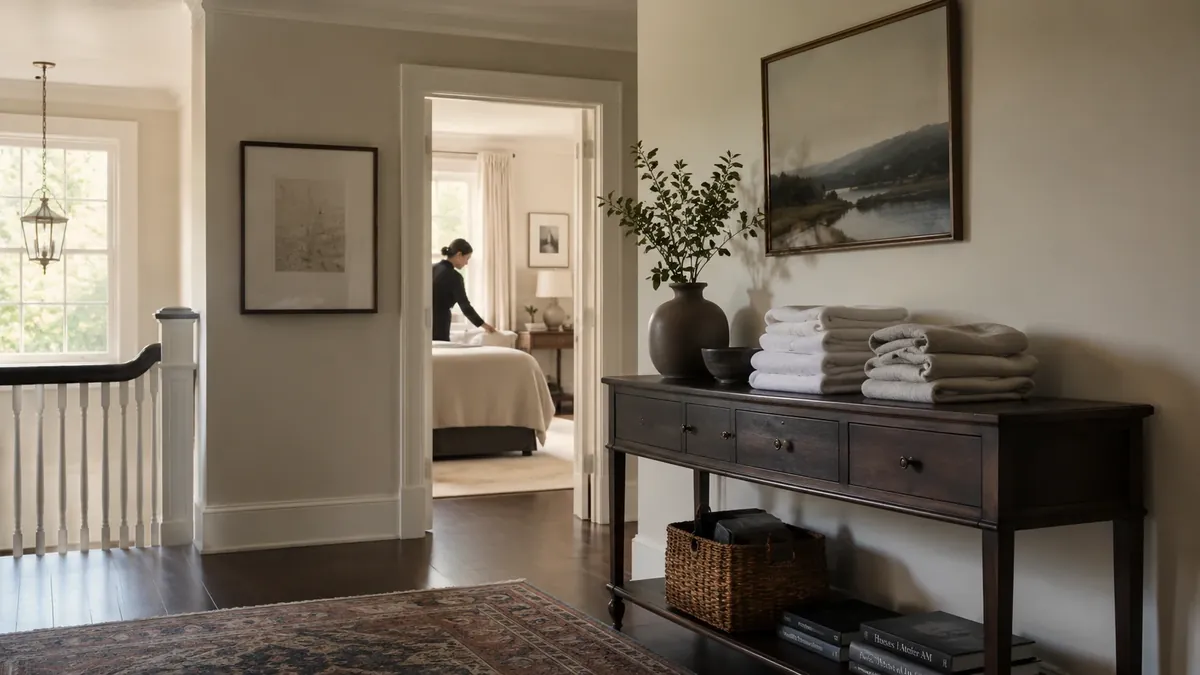
Choose the arrangement around the job.
Live-in and live-out describe where a professional lives in relation to the job; they do not indicate seniority. The right choice depends on schedule, commute, location, travel, privacy, and whether the household has suitable accommodation.
Start with the schedule
Ask when the work actually happens. A predictable daytime role with a reasonable commute may work well as live-out. A remote home, very early or late hours, or frequent transitions around travel and guests may make on-site accommodation more practical.
Define the regular hours and any planned flexibility.
Consider privacy on both sides
Some households value having key staff close to the home. Others prefer a clear separation at the end of the working day. Professionals may have the same preferences.
Neither arrangement is inherently more discreet. Privacy depends on boundaries, conduct, and how the household operates.
If the role is live-in, describe the accommodation
Be specific. Is it a private bedroom and bath, a separate apartment, staff quarters, or housing off the main property? Is any space shared? What happens when the family travels or the residence closes for a season?
These details affect whether experienced candidates will consider the role and whether the arrangement will work long term.
Living on the property does not mean being on call at all times
A professional who lives on the property still needs defined working hours and days off.
The job description should distinguish normal working hours, planned flexibility, emergencies, overnight responsibility where relevant, and days off. Any arrangement should also comply with applicable employment law.
Travel may matter more than live-in status
A Nanny, House Manager, Private Chef, or Family Assistant may live independently near the primary residence but stay with the family while traveling or at a seasonal home.
State the expected travel frequency, trip length, accommodation, notice, and how time away will be handled before hiring.
Remote properties may need housing
For homes far from a reliable labor pool, accommodation can widen the candidate market because a daily commute may be impractical.
Housing can solve a logistical problem. It should still provide privacy and clear boundaries.
Decide based on the work
Ask: What hours must be covered? Is the commute practical? Is the property remote? How much travel is required? Is overnight responsibility part of the job? Is suitable private accommodation available?
Start with the hours, location, travel, and responsibilities, then choose the arrangement that supports the job.